Clay Cutter STL File Doodle Flower: Fun & Functional
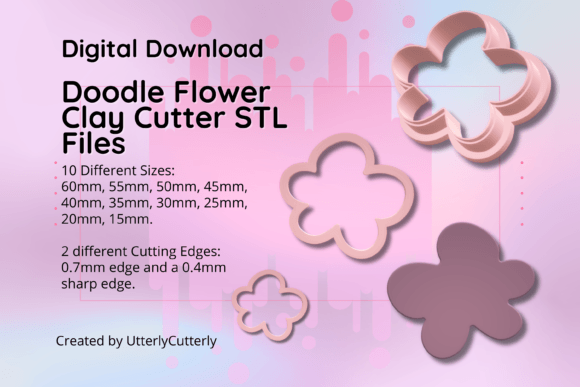
Creating consistent, intricate shapes by hand is one of the most time-consuming aspects of polymer clay jewelry making and edible art. The Clay Cutter STL File Doodle Flower- Fun collection bridges the gap between digital design and tactile creation, offering a practical solution for makers who demand precision without sacrificing whimsy. This digital download provides immediate access to high-quality 3D printable files, allowing you to produce professional-grade tools in your own workspace. Whether you are scaling a small business or refining a personal hobby, having on-demand access to specific cutter geometries transforms your production workflow.
Versatile Applications Beyond Polymer Clay
While primarily designed for jewelry creators, the utility of these doodle flower designs extends far beyond earrings and pendants. The geometric clarity of the STL files makes them exceptionally useful across various creative and commercial disciplines.
- Jewelry Manufacturing: Create uniform components for earrings, barrettes, and pendants. The ability to print ten distinct sizes allows for graduated designs or nested sets that maintain brand consistency.
- Culinary Arts: Food-safe printing materials (when properly sealed and used correctly) make these cutters ideal for fondant, gum paste, and cookie dough. The sharp edge variants provide clean lines essential for professional baking aesthetics.
- Educational Settings: Art educators can use these files to teach students about positive and negative space, scale, and material resistance. Printing custom tools is also an excellent STEM activity combining design software with physical fabrication.
- Product Photography: Marketers and content creators can print oversized versions as props or miniature versions for macro shots, ensuring visual assets match the exact aesthetic of the finished product line.
Technical Specifications and Print Optimization
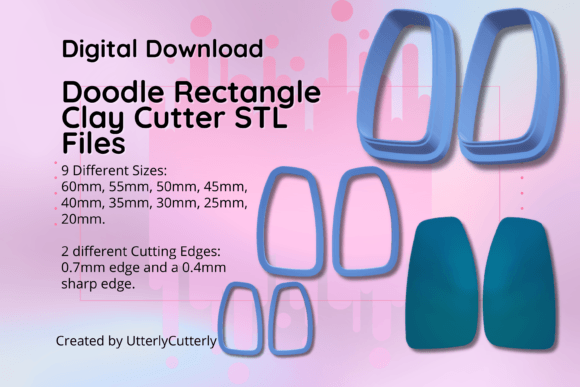
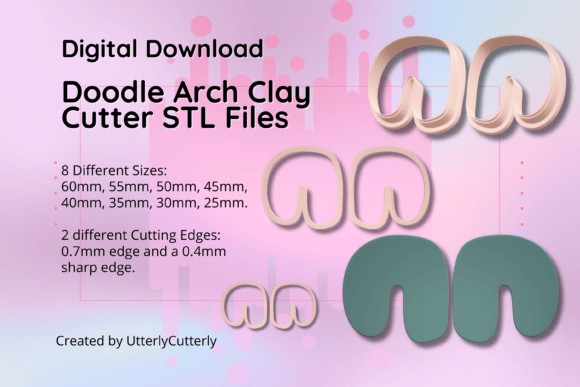
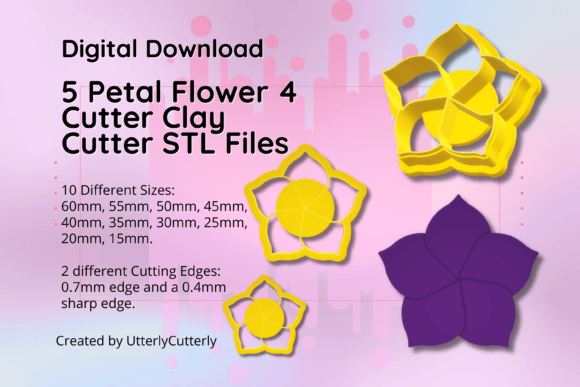
Understanding the engineering behind the Clay Cutter STL File Doodle Flower- Fun pack is crucial for achieving optimal results. These are not generic outlines; they are engineered tools with specific tolerances designed for additive manufacturing. Each purchase includes two distinct cutting edge profiles to accommodate different materials and finishing preferences.
Standard Wall vs. Sharp Edge Variants
The standard cutter features a 0.7mm wall thickness with a 3mm reinforced base and a total height of 12mm. This robust profile is ideal for stiffer clays or when you require significant leverage during the cutting motion. The wider wall reduces the risk of deformation during printing and extends the tool's lifespan under repeated pressure.
Conversely, the Sharp Edge (SE) variant is abbreviated in the file names for easy identification. It utilizes a 1mm support wall tapering to a precise 0.4mm cutting edge. This geometry mimics traditional metal cutters, providing cleaner slices through softer materials like porcelain clay or rolled fondant. Both variants share the same 3mm base and 12mm height, ensuring ergonomic consistency regardless of which blade type you choose to print.
Embossing Line Considerations
For designs featuring internal embossing details, the raised lines stand 10.5mm tall. This specific dimension requires mindful material preparation. To capture full detail without bottoming out, your clay slab must be thicker than 1.5mm. If you typically roll clay to 1mm, you will need to adjust your slat thickness or skip the embossing variant for that particular project. This specification prevents frustration and ensures every printed tool performs as intended.
Strategic Sizing for Production Efficiency
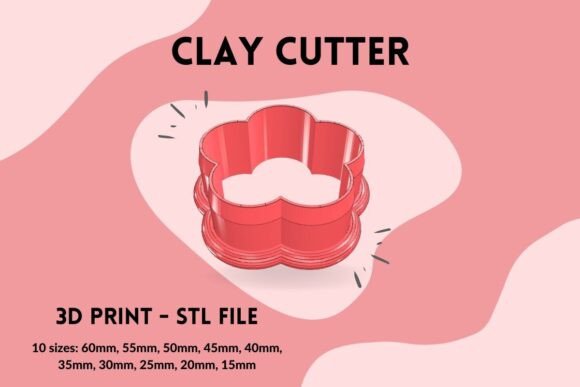
Size variation is often an afterthought in digital marketplaces, but this pack addresses it systematically. You receive ten incremental sizes ranging from 15mm to 60mm. Measurements are taken from the longest ends of the design, providing accurate dimensional data for planning.
This graduated sizing system offers tangible benefits for inventory management and design flexibility. A 60mm cutter might serve as a statement pendant or large cookie, while the 15mm version creates delicate charms or cake topper accents. Having the entire spectrum available digitally means you never have to wait for shipping when a client requests a custom size. You can curate unique combinations by mixing these doodle flowers with other STL files in your library, creating proprietary shape pairings that distinguish your brand from competitors using mass-produced tools.
Practical Implementation and Workflow Integration
Integrating digital fabrication into a traditional craft studio requires some adjustment. Since this is a digital download and not a physical item, success depends on your printer setup and slicing parameters. For the Sharp Edge variants, ensure your nozzle diameter and layer height settings can accurately reproduce the 0.4mm tip. A 0.4mm nozzle is generally sufficient, but fine-tuning flow rate and retraction settings will prevent blobbing on the critical cutting surface.
Post-processing is equally important. Even well-printed STL files may have minor layer lines. Light sanding with high-grit paper or applying a food-safe epoxy coating can smooth the cutting edge and improve release properties. For commercial users, maintaining a log of successful print settings for each cutter type saves time during future reprints. Documenting which filament brands work best with the SE versus standard walls builds institutional knowledge that streamlines production.
Evaluating Digital Tool Investments
When selecting STL files for professional or serious hobbyist use, prioritize functional engineering over decorative complexity. The Clay Cutter STL File Doodle Flower- Fun exemplifies this balance by offering dual edge types and comprehensive sizing rather than a single static design. Before purchasing any digital cutter file, verify that the included dimensions align with your existing equipment capabilities and material workflows.
Consider the long-term value of expandable libraries. Shops that release new STL files weekly enable gradual collection building without massive upfront costs. This model supports sustainable growth, allowing you to test new designs with minimal financial risk. As your skills develop and your product line evolves, having access to regularly updated, professionally engineered files ensures your toolkit remains relevant. The initial investment in quality digital assets pays dividends through reduced waste, faster prototyping, and the ability to respond quickly to market trends without supply chain dependencies.
Ultimately, these files represent more than just flower shapes; they are infrastructure for creative independence. By mastering the technical aspects of printing and implementing these tools strategically, you transform a simple digital download into a cornerstone of efficient, distinctive making. Whether producing hundreds of earrings for holiday markets or teaching a weekend workshop, having reliable, self-manufactured tools empowers you to focus on what matters most: the art itself.