Evaluating the Flower Clay Cutter STL 3D Print File for Polymer Clay Projects
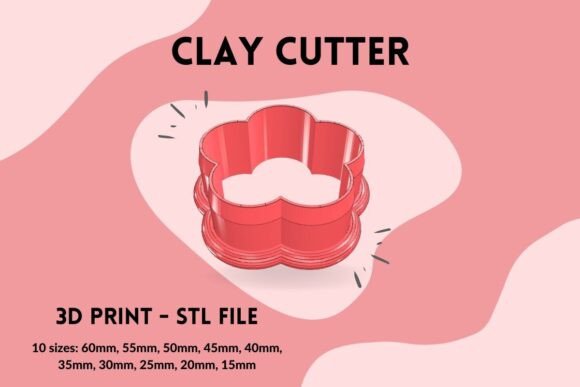
For polymer clay artists and jewelry makers, the transition from purchasing physical tools to manufacturing them digitally represents a significant shift in workflow and creative autonomy. The Flower Clay Cutter STL 3D Print File serves as a digital blueprint specifically engineered for this purpose, offering a classic five-petal flower design across ten distinct sizes. Unlike generic shape files found on open repositories, this specific STL is designed with functional ergonomics and material science in mind, featuring a 0.4mm cutting edge and rounded handles to reduce hand fatigue during repetitive use. Understanding the technical specifications and practical applications of this file is essential for makers deciding whether to integrate 3D-printed cutters into their studio practice or continue relying on traditional metal alternatives.
Technical Specifications and Design Integrity
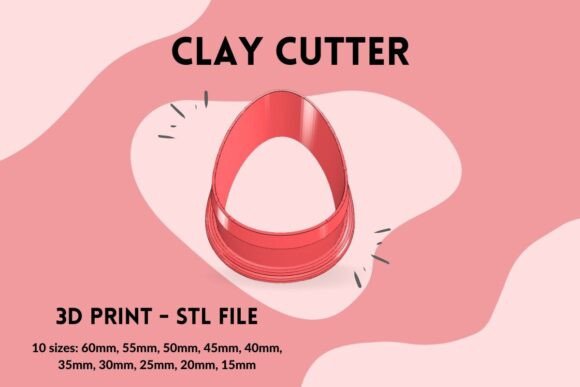
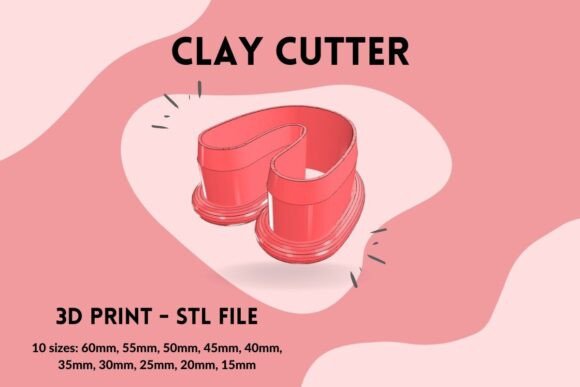
When evaluating any STL file for functional tool creation, dimensional accuracy and printability are paramount. This Flower Clay Cutter STL 3D Print File distinguishes itself through precise sizing parameters that cater to scalable design work. The set includes ten incremental sizes: 15mm, 20mm, 25mm, 30mm, 35mm, 40mm, 45mm, 50mm, 55mm, and 60mm. It is critical to note that these measurements reflect the height of the cutter, not the width, ensuring consistent vertical scaling for floral motifs.
The engineering of the cutting edge is optimized for standard FDM (Fused Deposition Modeling) printers. With a sharp cutting edge set at 0.4mm, the file aligns perfectly with the most common nozzle diameter used in hobbyist and prosumer 3D printing. This alignment minimizes slicing errors and ensures the wall thickness is sufficient to maintain rigidity without being so thick that it displaces excessive clay. Furthermore, the inclusion of rounded handles addresses a common failure point in DIY cutter design; flat-topped cutters often cause pain or blistering during extended sessions, whereas this ergonomic consideration allows for sustained pressure application necessary for clean cuts in conditioned clay.
Comparing 3D Printed Cutters to Metal Alternatives
Makers frequently weigh the benefits of 3D printed tools against commercially available stainless steel or copper cutters. Each option presents distinct tradeoffs regarding cost, durability, and customization.
- Customization vs. Standardization: Metal cutters are typically mass-produced in fixed sizes. If a project requires a 35mm flower but only 30mm and 40mm options exist commercially, the artist must compromise. The Flower Clay Cutter STL 3D Print File eliminates this gap by providing a complete gradient of sizes. Additionally, if a maker wishes to modify the handle height or reinforce the outer wall for stiffer clay, the digital nature of the STL allows for parametric adjustments before printing.
- Cut Quality and Finish: Stainless steel cutters generally offer a superior edge finish and longevity. They slice through firm clay with minimal resistance and do not degrade over time. 3D printed cutters, while effective, have layer lines that can occasionally texture the clay edge. However, for many jewelry and decorative applications, this micro-texture is negligible or can be smoothed post-cut. The 0.4mm edge on this STL is designed to balance sharpness with structural integrity, though it will never match the razor thinness of sheet metal.
- Cost Efficiency and Accessibility: A single high-quality metal cutter can cost between $5 and $15. Printing an entire set of ten sizes from this STL file costs mere cents in filament and electricity. For artists experimenting with new shapes or requiring niche sizes for a specific collection, the financial risk of 3D printing is significantly lower than building a metal inventory.
- Durability Considerations: PLA and PETG cutters are consumable tools. They may warp if left in hot cars or crack under extreme pressure with very hard clay. Metal cutters are heirloom-quality tools. Users should view this Flower Clay Cutter STL 3D Print File as a solution for prototyping, custom sizing, and moderate-volume production rather than a permanent replacement for heavy-duty industrial tools.
Optimizing Print Settings for Functional Performance
The success of a functional print relies heavily on slicer configuration. While the file has been tested for quality, individual printer calibration varies. The recommended baseline settings for this Flower Clay Cutter STL 3D Print File include a 0.4mm nozzle and a print speed of 150 mm/sec. However, users should consider the following adjustments based on their specific hardware and material choices:
- Wall Count: Prioritize walls over infill. For clay cutters, 3 to 4 perimeter walls provide the necessary rigidity to prevent flexing during use. Infill percentage is less relevant for such small, solid objects.
- Layer Height: A 0.12mm to 0.16mm layer height is often ideal for the cutting edge area to maximize sharpness, while the handle can be printed at 0.2mm to save time. Variable layer height features in modern slicers facilitate this optimization.
- Material Selection: Standard PLA is acceptable for soft polymer clay, but PETG or ABS/ASA offers better resistance to deformation and chemical interaction with clay plasticizers. Food-safe considerations are also vital if the cutters are intended for cookie dough; standard PLA is not food-safe due to bacterial growth in layer lines, necessitating specialized filaments or single-use protocols for culinary applications.
- Cooling: Maximize part cooling for the cutting edge to ensure crisp definition, but reduce cooling slightly for the handle layers to improve inter-layer adhesion and prevent delamination under stress.
Best-Fit Scenarios and Limitations
Determining when to utilize this digital resource versus seeking other solutions depends on the specific requirements of the project at hand.
Ideal Use Cases
This Flower Clay Cutter STL 3D Print File is particularly advantageous for jewelry designers creating graduated sets, such as earrings where a 20mm bloom pairs with a 15mm bud. The comprehensive size range supports cohesive collections without sourcing multiple vendors. It is also ideal for seasonal embellishments where specific scale matters for proportion relative to other decorative elements. Artists working with softer clays, like Sculpey Soufflé or Cosclay, will find the 0.4mm edge sufficiently sharp for clean results. Additionally, educators and workshop leaders benefit from the ability to print dozens of identical, low-cost tools for student use.
When to Consider Alternatives
If the primary application involves extremely firm clays, such as Kato Polyclay or Fimo Professional straight from the block, 3D printed edges may dull quickly or fail to cut cleanly without excessive force. In these instances, sharpened metal cutters remain the superior choice. Similarly, for high-volume commercial production where thousands of cuts are required daily, the time investment in printing and potential replacement rate of plastic cutters may outweigh the initial savings. Finally, if absolute mirror-smooth edges are required without any post-processing sanding, the inherent layer lines of FDM printing may be a limiting factor, suggesting silicone molds or metal stamping as better alternatives.
Making an Informed Decision
The decision to adopt the Flower Clay Cutter STL 3D Print File should be rooted in a realistic assessment of one's printing capabilities and artistic needs. This file offers exceptional value through its size variety and ergonomic design, bridging the gap between generic freebies and expensive custom metalwork. By understanding the mechanical properties of printed plastics and adjusting expectations regarding edge finish and longevity, makers can effectively leverage this digital asset to expand their creative toolkit. Whether used as a primary cutting method or a supplementary prototyping resource, this STL file exemplifies how digital fabrication can enhance traditional craft practices when applied with technical awareness and practical intent.