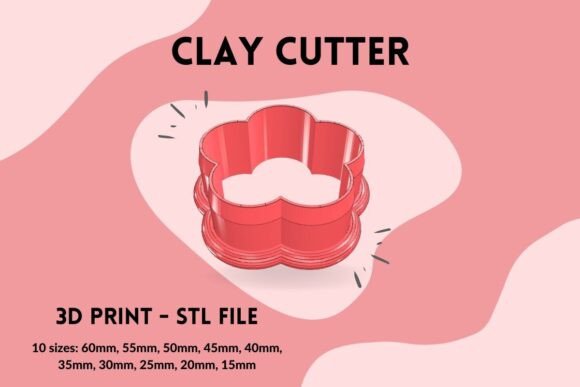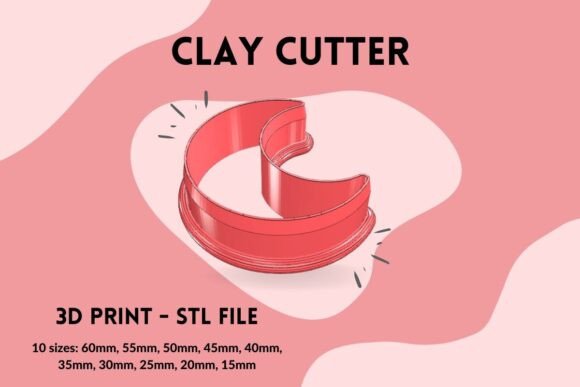
Horseshoe Clay Cutter 3D Print STL File Guide
Unleashing creativity in polymer clay and cookie decorating often comes down to having the right tools at your fingertips. The Horseshoe Clay Cutter 3D Print STL File offers a digital solution for artisans who want to bring a symbol of luck and charm into their physical creations. This versatile digital asset is perfectly engineered for 3D printing, providing a bridge between digital design and tactile craftsmanship. Rather than relying on mass-produced metal cutters that may not fit specific project dimensions, this file allows makers to produce custom tools tailored to their exact needs.
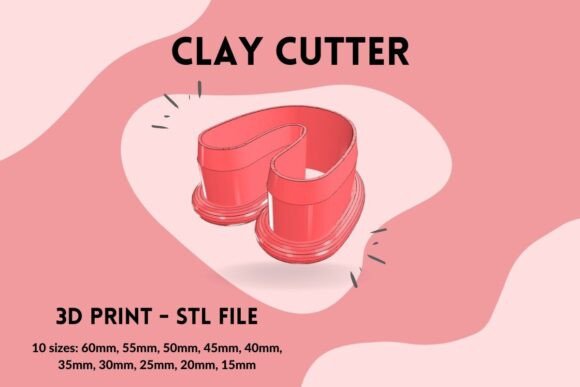
This digital pack includes ten distinct sizes ranging from 15mm to 60mm, ensuring you have the perfect cutter for projects of all scales. Whether you are crafting delicate jewelry charms or substantial home decor pieces, the ability to print your own tools transforms how you approach your craft. Each shape is designed with precision to promise clean cuts and consistent results, addressing one of the most common frustrations in clay work: ragged edges and uneven shapes.
Why Audience Needs Vary for Digital Cutters
A single STL file serves multiple communities, but the value proposition shifts depending on who is holding the 3D printer. Understanding these different perspectives helps clarify whether this specific horseshoe cutter set aligns with your current goals.
For Jewelry Makers and Hobbyists
If you create wearable art, precision is non-negotiable. The smaller sizes in this set—specifically the 15mm, 20mm, and 25mm options—are critical for earring components and pendant bases. Hobbyists often struggle to find commercial cutters in these micro-sizes. By printing your own, you gain access to tools that might otherwise be unavailable or prohibitively expensive. The chamfered cutting edge at 0.4mm is particularly relevant here, as it slices through polymer clay without dragging, preserving fine details that define professional-looking jewelry.
For Small Business Owners and Entrepreneurs
For those selling finished goods, consistency equals brand reliability. Customers expect every horseshoe charm in a collection to look identical. This STL file supports that need for uniformity across production runs. Furthermore, owning the digital file means you can replace worn-out cutters instantly without waiting for shipping. From a cost perspective, printing a replacement cutter costs pennies in filament compared to purchasing new inventory. This flexibility allows business owners to experiment with limited-edition sizes or seasonal variations without significant financial risk.
For Educators and Workshop Leaders
In teaching environments, durability and safety take precedence over microscopic precision. The larger sizes (45mm, 50mm, 55mm, and 60mm) are ideal for classroom settings where students are learning basic shaping techniques. The rounded handles mentioned in the design specifications are a vital feature for this demographic, reducing hand fatigue during repetitive use and making the tool more ergonomic for younger hands or those with motor skill challenges. Educators can print dozens of cutters for the price of a single retail metal set, making workshops more accessible and budget-friendly.
Technical Specifications and Design Features
Evaluating a digital file requires looking beyond the aesthetic shape. The functional geometry of this Horseshoe Clay Cutter 3D Print STL File has been tested to ensure usability. Understanding these specs helps users determine if the file matches their printer’s capabilities and their material requirements.
- Size Range: 10 sizes including 15mm, 20mm, 25mm, 30mm, 35mm, 40mm, 45mm, 50mm, 55mm, and 60mm.
- Sizing Note: Measurements reflect the longest dimension of the cutter.
- Cutting Edge: Features a 0.4mm chamfer for sharp, clean slicing.
- Ergonomics: Handles are rounded to prevent digging into fingers during pressure application.
- Versatility: Suitable for both polymer clay and cookie dough applications.
The distinction regarding the "longest size" measurement is crucial for planning. A 30mm cutter refers to the maximum span, which aids in selecting the right tool for pre-measured clay slabs or cookie dough portions. The 0.4mm chamfer is optimized for standard FDM printers; attempting to print a sharper blade often leads to fragile edges that snap, while a thicker edge pushes clay rather than cutting it. This balance makes the file reliable for standard desktop 3D printers.
Optimizing Your 3D Printing Settings
While the file is tested for quality, success depends heavily on your specific hardware and slicer configuration. Different printers handle thin walls and small details differently. Adjusting settings based on the recommended baseline ensures the cutter performs as intended.
Recommended Baseline Settings
The creator suggests using a 0.4mm nozzle with a print speed of 150 mm/sec. These parameters prioritize structural integrity and surface finish. However, users should treat this as a starting point rather than an absolute rule.
- Nozzle Selection: Stick to a 0.4mm nozzle for the best balance of strength and detail. Using a 0.6mm nozzle may make the cutting wall too thick for clean clay release, while a 0.2mm nozzle increases print time significantly without adding necessary durability for this specific tool type.
- Wall Count: Ensure your slicer is set to at least 3 or 4 perimeter walls. The cutting edge relies on wall density for rigidity. Infill percentage matters less than outer shell strength for clay cutters.
- Material Choice: PLA is generally sufficient for polymer clay. If using the cutters for food items like cookies, verify that your filament is food-safe and consider sealing the printed part, as layer lines can harbor bacteria. For heavy-duty commercial clay use, PETG or ABS may offer better longevity against abrasive clay compounds.
- Speed Adjustments: While 150 mm/sec is the tested speed, slower speeds (40–60 mm/sec) for the outer walls can improve surface smoothness. Smoother walls mean less friction when releasing clay, resulting in cleaner cuts.
Determining If This File Fits Your Workflow
Not every maker needs a digital cutter library. Evaluating whether this Horseshoe Clay Cutter 3D Print STL File is right for you involves assessing your volume, customization needs, and access to technology.
You will benefit most if: You already own a 3D printer and frequently find yourself limited by available retail tool sizes. It is also ideal for creators who prototype designs digitally before committing to physical production, or for educators needing bulk tools on a tight budget. The digital nature of the product means immediate access, eliminating shipping delays for urgent projects.
You may prefer traditional tools if: You do not have access to a 3D printer and have no interest in outsourcing printing services. Metal cutters remain superior for extremely high-volume industrial production where thousands of cuts are made daily without pause. Additionally, if you require FDA-certified food safety guarantees without post-processing, stamped steel cutters may be a safer regulatory choice for commercial bakeries.
Ultimately, this digital file represents autonomy in toolmaking. It shifts the artisan from being a consumer of fixed-size instruments to a creator of bespoke equipment. Whether you are adding a touch of luck to a bridal jewelry line, teaching a weekend pottery class, or simply enjoying a relaxing evening of clay sculpting, having the ability to print the exact size you need empowers your creative process. Remember that this is a digital-only product; the satisfaction comes not just from the download, but from the tangible objects you build with it.