Clay Cutter STL File: Lolly Candy Sucker Design
Unearth a treasure trove of candy sucker lolly shape clay cutters, yours to own as an immediate digital STL file download. For makers who rely on precision and variety, this specific Clay Cutter STL File Lolly- Candy Sucker collection bridges the gap between whimsical design and professional utility. Whether you are sculpting polymer clay earrings for an Etsy shop or creating uniform cookie cutouts for a bakery display, these digital assets serve as the foundation for consistent, high-quality output. Designed for seamless printing, our collection boasts an array of delightful and flexible designs, with new STL files sprouting up in our shop every week like mushrooms after rain.
Technical Specifications and Print Variations
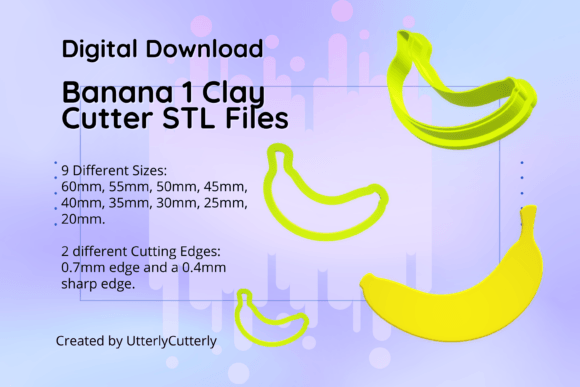
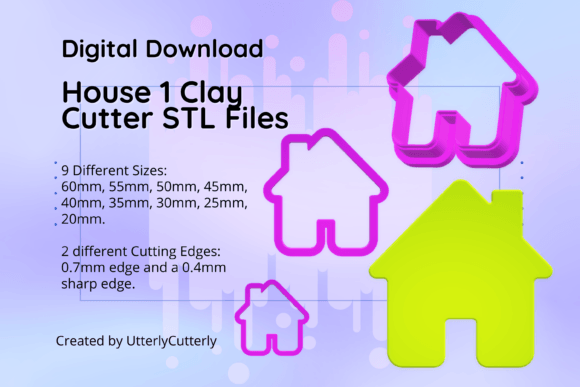
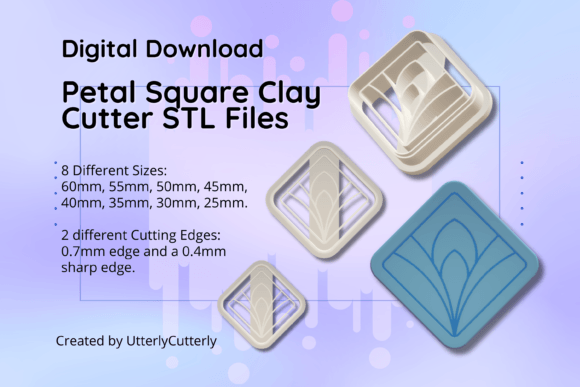
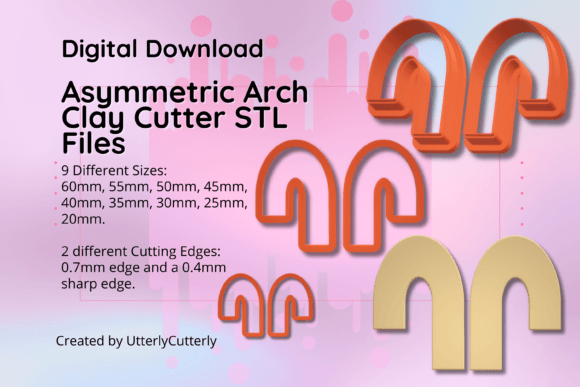
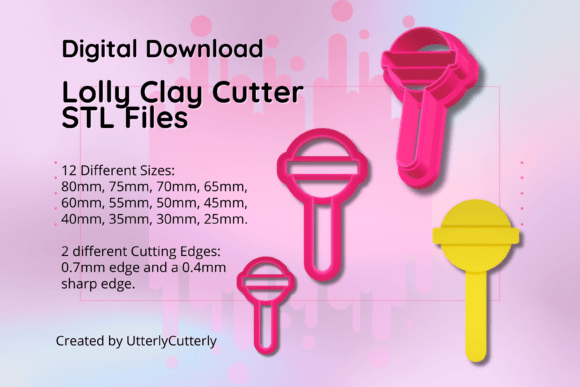
Understanding the technical parameters of your digital tools is just as important as the creative vision behind them. In this pack, you will have access to 2 different cutting edges across 12 distinct sizes. This granularity allows professionals to curate custom and unique cutter combos easily when paired with other STL files in their library. The sizing is measured from the longest ends to ensure accuracy during the design phase of your jewelry or confectionery projects.
The available sizes cover a comprehensive spectrum for scaling projects:
- 80mm and 75mm for statement pieces or large cookies
- 70mm, 65mm, and 60mm for standard medium applications
- 55mm, 50mm, and 45mm for versatile everyday use
- 40mm, 35mm, 30mm, and 25mm for delicate charms and miniature details
Beyond size, the functionality of a Clay Cutter STL File Lolly- Candy Sucker depends heavily on the blade geometry. We provide two distinct cutter types to accommodate different materials and finishing preferences. The first option features a 0.7mm wall thickness with a 3mm thick base and a total height of 12mm. This robust profile offers durability and is often preferred for softer clays or doughs where a slightly wider impression is acceptable.
The second option is designated as "Sharp Edge," abbreviated to SE in the file names. This variant includes a 1mm support wall leading to a precise 0.4mm cutting edge, maintaining the same 3mm base and 12mm height. The SE version is critical for polymer clay artists who require crisp, clean lines that minimize post-processing sanding. If there are any embossing lines included in the design, they are set at 10.5mm tall, ensuring they engage properly with the material without bottoming out against the base.
Applications Across Creative and Commercial Sectors
The versatility of the lolly shape extends far beyond simple nostalgia. For jewelry designers, this silhouette offers a recognizable yet customizable canvas. Using the smaller 25mm to 40mm SE cutters, creators can produce lightweight resin or clay earrings that capture light and color effectively. The sharp edge ensures that intricate details remain defined even after baking and curing. Because the STL files are digital, entrepreneurs can iterate on surface textures or add personalized monograms in their slicing software before printing, allowing for rapid prototyping of seasonal collections.
In the culinary and baking sector, consistency is currency. Professional bakers and content creators utilize the larger 60mm to 80mm profiles to create uniform treats for photography, catering, or retail packaging. Unlike metal cutters that may bend over time or vary between batches, a 3D-printed cutter produced from a verified STL file guarantees identical dimensions every time. This reliability is essential for brand cohesion, especially for businesses that sell DIY kits or host workshops where participants expect professional-grade tools.
Educators and workshop facilitators also find immense value in this digital format. Rather than investing in expensive inventory that may not suit every student's project, instructors can print exactly what is needed on demand. The ability to scale the Clay Cutter STL File Lolly- Candy Sucker within reasonable tolerances means a single file can serve multiple age groups or skill levels. For art therapists or special education teachers, the tactile nature of using these specific shapes can facilitate sensory engagement and fine motor skill development in a structured, enjoyable way.
Optimizing Your 3D Printing Workflow
Owning the digital file is only the first step; achieving optimal results requires thoughtful preparation. When printing the Sharp Edge (SE) variants, orientation matters significantly. Printing the cutter upright with the cutting edge facing the build plate usually yields the sharpest result, though it may require careful bed adhesion strategies. Alternatively, printing with the base down and using a high-resolution layer height (0.12mm or lower) can reduce stair-stepping on the blade, though some minor cleanup may still be required.
Material selection should align with the intended application. Food-safe PLA or PETG is mandatory for any cutter destined for cookie or fondant work. These materials resist moisture absorption and can be sanitized appropriately. For polymer clay exclusively, standard PLA is often sufficient and easier to print with high dimensional accuracy. However, users should be aware that clay dust can be abrasive; keeping separate sets of cutters for food and craft use prevents cross-contamination and preserves the integrity of the cutting edge.
Slicing settings play a pivotal role in the longevity of your tools. Increasing the perimeter count to three or four walls adds necessary rigidity to the 12mm height, preventing the cutter from flexing during use. A higher infill percentage near the base reinforces the connection point between the handle and the blade. For the 0.7mm wall version, ensuring your extruder is calibrated correctly is vital, as under-extrusion can lead to weak layer adhesion in such thin vertical walls.
Maximizing Value Through Digital Ownership
The shift toward digital STL files represents a significant efficiency gain for modern makers. Traditional manufacturing involves long lead times, shipping costs, and minimum order quantities. With the Clay Cutter STL File Lolly- Candy Sucker, production capacity is limited only by your printer’s speed and your imagination. This agility allows small business owners to respond to trends instantly. If pastel goth aesthetics surge in popularity one week, you can print matching cutters the next day without waiting for international freight.
Furthermore, digital ownership supports sustainable crafting practices. Instead of accumulating plastic tools that may eventually break or become obsolete, you maintain a library of files and print replacements or variations only as needed. Failed prints can be recycled into filament, and successful tools are made from biodegradable or recyclable thermoplastics. This closed-loop approach resonates with eco-conscious consumers and aligns with the values of many contemporary artisan brands.
For those looking to expand their product lines, these cutters serve as excellent loss leaders or bundle additions. Makers can include a branded, printed lolly cutter with larger clay orders as a value-add, enhancing customer unboxing experiences. Digital marketplaces also allow for the resale of finished goods created with these tools, provided the licensing terms of the STL are respected. Always verify whether the file license permits commercial use of the physical objects versus the digital file itself to maintain ethical business practices.
Practical Considerations for Selection and Use
When evaluating whether this specific pack meets your needs, consider your current workflow bottlenecks. If you spend excessive time hand-carving symmetrical shapes or repairing uneven edges, the standardized geometry of these STL files will directly improve productivity. The inclusion of both standard and sharp edge options eliminates the need to purchase separate packs for different materials, consolidating your digital asset management.
Users should also account for printer calibration when working with the 0.4mm cutting edge. Not all consumer-grade 3D printers can reliably reproduce features this thin without tuning. Running a tolerance test print before committing to a full batch of cutters saves time and filament. Adjusting flow rate and retraction settings specifically for thin-wall printing can mean the difference between a usable tool and a fragile prototype.
Finally, remember that the 10.5mm embossing height is designed for specific material depths. When working with thinner sheets of clay or rolled fondant, you may need to adjust your rolling guides or use spacers to ensure the embossed detail transfers fully without distorting the overall shape. Testing on scrap material before cutting final pieces helps establish the ideal pressure and material thickness for your specific printer’s output. By treating these digital files as precision instruments rather than generic templates, you unlock their full potential for both personal satisfaction and professional excellence.