Clay Cutter STL File Cross 4: Christian Designs
Unearth a treasure trove of Christian cross clay cutters, yours to own as a digital STL file download. Perfect for sculpting everything from earrings to cookie cutouts, these cutters are a crafter’s dream for both gifting and self-spoiling. The Clay Cutter STL File Cross 4- Christian collection is designed specifically for seamless printing, boasting an array of delightful and flexible designs. With new STL files sprouting up in our shop every week like mushrooms after rain, this specific pack ensures you have immediate access to versatile tools without waiting for physical shipping.
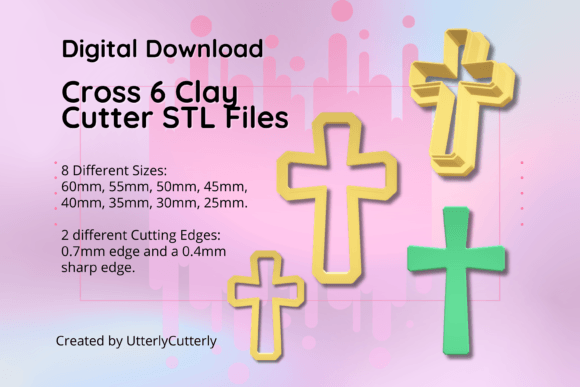
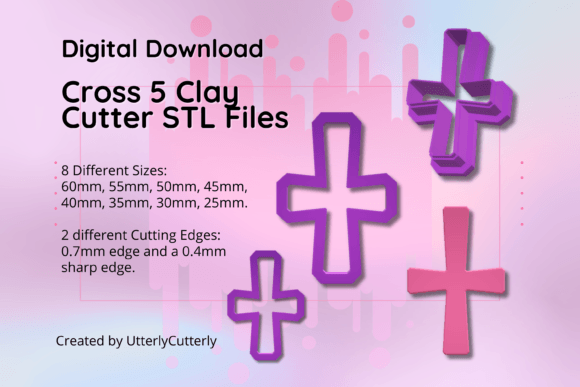
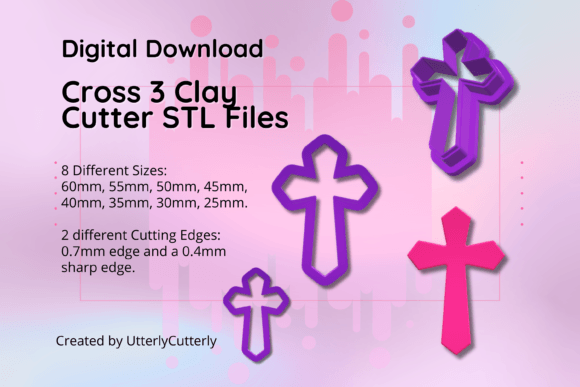
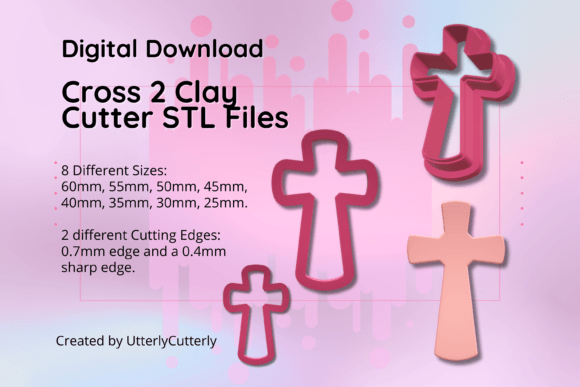
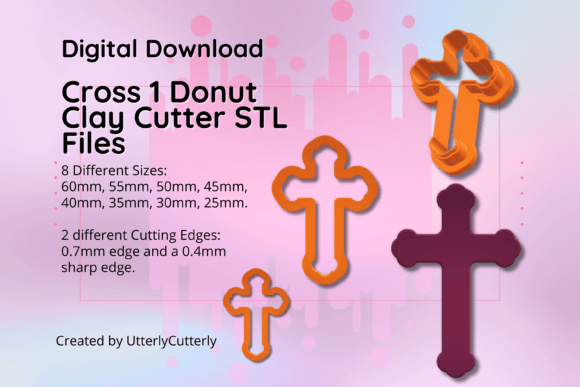
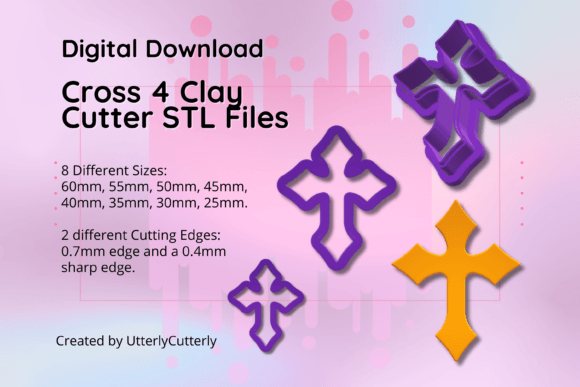
In this pack, you will receive two different cutting edge profiles across eight distinct sizes. If you have a 3D printer, here you can find all the digital files you need to create beautiful jewelry or cookies. This digital-first approach transforms how creators access specialized tools, removing geographical barriers and allowing for instant gratification in the creative process.
Technical Specifications and Sizing Guide
Understanding the precise dimensions and mechanics of your tools is essential for achieving professional results. The cutter size is always measured from the longest ends, ensuring consistency across your projects. This set comes in graduated sizes so you too can look to curate custom and unique cutter combos easily with our other STL files. The available sizes include:
- 60mm: Ideal for large pendants, altar decor, or substantial cookie treats.
- 55mm & 50mm: Perfect standard sizes for statement necklace pieces.
- 45mm & 40mm: Versatile mid-range options for general crafting.
- 35mm & 30mm: Excellent for bracelet charms and smaller religious tokens.
- 25mm: Designed for delicate stud earrings or miniature cake toppers.
Beyond size, the blade geometry dictates the final finish of your work. This pack includes two distinct cutter types to address different material behaviors and aesthetic goals.
The Standard Edge vs. Sharp Edge (SE)
The first option features a 0.7mm wall thickness. This robust profile offers durability during the printing process and provides a slightly rounded edge that is forgiving on softer clays. It has a 3mm thick base and a height of 12mm, providing ample grip and structural integrity when pressing into dense polymer clay.
The second option is the Sharp Edge (abbreviated as SE in the files). This variant features a 1mm support wall tapering to a cutting edge of only 0.4mm. Like the standard version, it maintains a 3mm thick base and a 12mm height. The SE design is engineered for cleaner cuts in firm materials, reducing drag and minimizing the need for post-processing sanding. Choosing between these edges depends largely on your material density and desired finish quality.
Perspectives for Different Creators
A digital STL file holds different value propositions depending on who is holding the mouse. While the end product—a cross-shaped cutter—remains constant, the intent behind acquiring the Clay Cutter STL File Cross 4- Christian varies significantly across audiences.
For Small Business Owners and Entrepreneurs
If you run an Etsy shop or sell at craft fairs, speed and inventory management are paramount. Physical cutters require storage space and shipping times. By utilizing digital files, you eliminate overhead costs associated with pre-made tools. More importantly, you gain agility. If a customer requests a specific size of cross earring for a baptism gift, you can print the exact 30mm or 35mm cutter needed within minutes rather than sourcing it externally. The ability to offer eight sizes from a single file purchase dramatically increases your potential SKU count without increasing physical inventory risk.
For Educators and Ministry Leaders
Sunday school teachers and youth group leaders often seek tactile activities that reinforce spiritual lessons. For this audience, cost-effectiveness and safety are priorities. The standard 0.7mm edge is often preferable here, as it is less sharp and more durable against enthusiastic handling by children. Printing multiple copies of the larger 50mm or 60mm cutters allows an entire class to participate simultaneously. The digital nature of the file means if a cutter breaks or goes missing, a replacement is merely a print job away, ensuring the lesson plan remains uninterrupted.
For Hobbyists and Beginners
Newcomers to polymer clay or 3D printing often face a steep learning curve regarding tool selection. This pack serves as an excellent educational benchmark. Having both a standard and a sharp edge allows beginners to physically feel the difference in resistance and finish. You might start with the 45mm standard cutter to practice conditioning clay and achieving even thickness, then graduate to the SE version to refine your cutting technique. The inclusion of embossing guidelines helps novices understand the relationship between tool depth and material volume, preventing common frustrations like sticking or tearing.
Practical Considerations for Printing and Usage
Owning the file is only the first step; successful execution requires attention to detail. When preparing your slicer software, consider the orientation of the print. Printing cutters upside down (with the cutting edge against the build plate) usually yields the smoothest functional surface, though it may require supports. Alternatively, printing right-side up avoids supports but may leave layer lines on the cutting face that require light sanding.
Note on Embossing: If there are any embossing lines included in the design, they are 10.5mm tall. This specification is critical. To ensure the embossing registers clearly without bottoming out, you must work on clay thicker than 1.5mm. Attempting to use these cutters on paper-thin sheets will result in a flat impression rather than a defined relief. Always condition your clay to the appropriate gauge before using the deeper features of the Cross 4 design.
Evaluating Fit for Your Creative Goals
Before downloading, assess whether this specific collection aligns with your current workflow. Ask yourself the following practical questions:
- Do I have reliable FDM or Resin printing capabilities? These files are optimized for standard consumer printers, but calibration matters. Ensure your printer can handle small details like the 0.4mm SE tip.
- Is my primary medium compatible? While marketed for clay and cookies, these cutters also excel with fondant, gum paste, and even soft soap bases. However, extremely hard materials like metal clay may dull the plastic edges prematurely.
- Do I need commercial licensing? Verify the terms of use. Typically, STL files grant you the right to make items to sell, but not to resell the digital file itself or the printed cutters as standalone products unless specified.
- Does the size range match my niche? If you exclusively make micro-miniature dollhouse items, the 25mm smallest size might still be too large. Conversely, if you make wall art, even the 60mm size might serve only as a detail element.
Maintaining Long-Term Usefulness
Digital assets offer longevity that physical tools cannot match. Plastic cutters eventually crack or warp; STL files do not degrade. To maximize the long-term value of the Clay Cutter STL File Cross 4- Christian, organize your digital library meticulously. Create folders sorted by theme, size, and edge type. Label your physical prints with permanent marker or paint pens immediately after printing, as distinguishing between a 0.7mm and 0.4mm edge by eye alone becomes difficult over time.
Furthermore, treat these files as a foundation for customization. Experienced users often import STLs into CAD software to modify wall heights or add personalized text before printing. Because you own the source geometry, the utility of this pack extends far beyond the initial download. Whether you are creating meaningful gifts for a congregation, building a sustainable jewelry business, or simply exploring the meditative practice of working with clay, having precise, scalable, and reproducible tools empowers your creativity to flourish without technical limitation.