Clay Cutter STL File Potion Bottle 1- Ma Guide
For creators working with polymer clay, fondant, or cookie dough, achieving consistent and intricate shapes is often the difference between a hobbyist project and a professional product. The Clay Cutter STL File Potion Bottle 1- Ma offers a precise digital solution for makers who own 3D printers and want to expand their toolkit without waiting for shipping. This digital download provides immediate access to a versatile set of cutting tools designed specifically for detailed craftsmanship. Whether you are producing small-batch jewelry or decorating themed baked goods, having control over your cutter geometry allows for greater creative freedom and production efficiency.
Technical Specifications and Print Variations
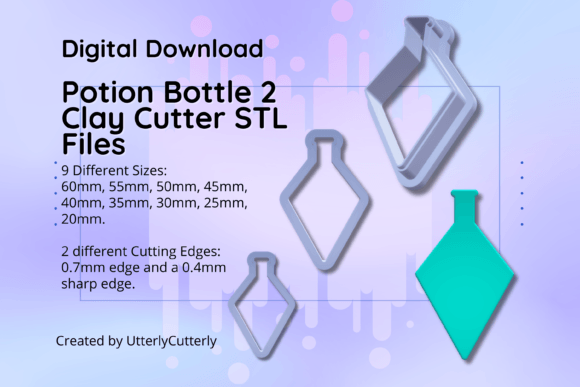
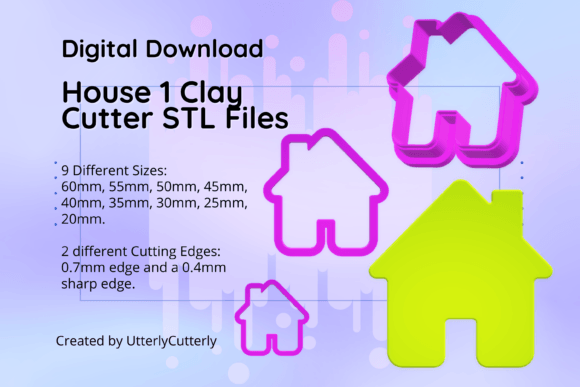
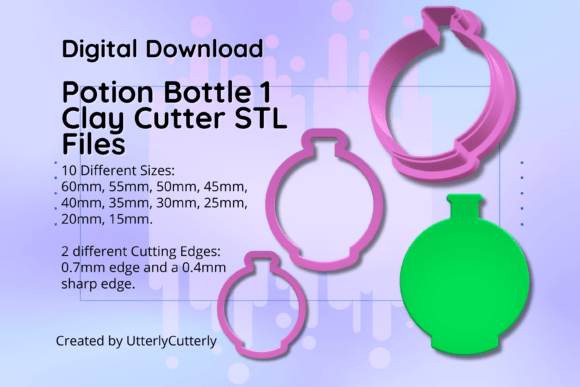
Understanding the technical parameters of an STL file is crucial before sending it to your slicer software. This specific pack is engineered with versatility in mind, offering two distinct cutting edge profiles to suit different materials and finishing requirements. Both variations share a robust 3mm thick base and a 12mm height, providing enough surface area for comfortable handling while maintaining structural integrity during the printing process.
- Standard Edge: Features a 0.7mm wall thickness. This profile is ideal for general-purpose polymer clay work where durability is prioritized over razor-sharp precision. It produces a clean cut that requires minimal post-processing.
- Sharp Edge (SE): Abbreviated as SE in the file names, this variation includes a 1mm support wall tapering to a 0.4mm cutting edge. This design is intended for detailed work, softer clays, or fondant where reducing drag and deformation is essential.
If your design workflow involves embossing, note that any embossing lines within this model are 10.5mm tall. To ensure the embossed detail transfers correctly without bottoming out, you should condition your clay to a thickness greater than 1.5mm. This specification prevents the cutter from pressing through the material entirely, preserving the dimensional relief that gives potion bottle designs their magical aesthetic.
Sizing Strategy for Product Cohesion
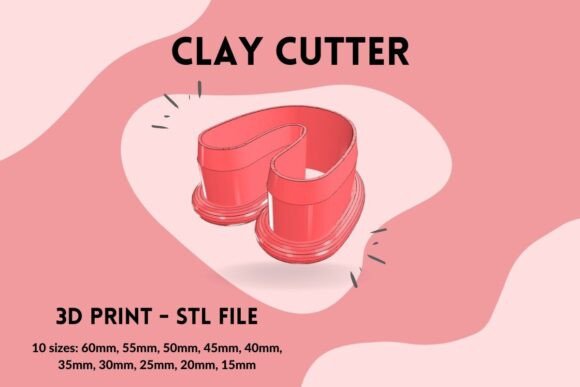
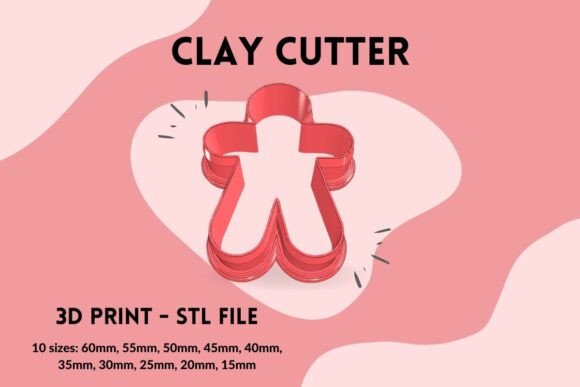
One of the primary advantages of using digital files like the Clay Cutter STL File Potion Bottle 1- Ma is the ability to scale designs systematically. This pack includes ten discrete sizes measured from the longest ends: 60mm, 55mm, 50mm, 45mm, 40mm, 35mm, 30mm, 25mm, 20mm, and 15mm. This graduated sizing is not arbitrary; it facilitates curated collections.
For jewelry makers, the 15mm to 25mm range is typically optimal for earrings and delicate pendants. The 30mm to 40mm sizes work beautifully for hair barrettes, brooches, or keychain charms. Larger formats, such as the 50mm to 60mm options, transition well into home decor, ornament creation, or cookie decoration. By utilizing a standardized size progression, you can create cohesive product lines where every piece feels intentionally related, enhancing brand perception and customer trust.
Practical Applications Across Mediums
While primarily marketed toward polymer clay artists, the utility of these STL files extends across multiple creative and commercial domains. The dual-edge design makes this tool adaptable to various material viscosities and end-use requirements.
Jewelry and Wearable Art
In the competitive handmade jewelry market, uniqueness is currency. Standard silicone molds often result in identical pieces across multiple shops. By printing your own cutters from the Clay Cutter STL File Potion Bottle 1- Ma, you differentiate your inventory. The Sharp Edge variant is particularly valuable here, as it minimizes the need for sanding and refining raw clay edges. Less time spent on post-processing translates directly to higher profit margins and faster turnaround times for custom orders.
Culinary Arts and Baking
Fondant and cookie dough behave differently than polymer clay, requiring tools that release easily without sticking. The 0.4mm Sharp Edge is generally superior for food-safe applications because it slices through sugar paste cleanly rather than compressing it. When using these cutters for baking, always ensure you print with food-safe filaments and follow proper sanitation protocols. The larger sizes in this pack are excellent for creating uniform cookies for wedding favors or themed party platters, where consistency in size ensures even baking and professional presentation.
Educational and Therapeutic Settings
Educators and art therapists often seek tactile activities that build fine motor skills and spatial reasoning. Potion bottle shapes carry a narrative element that engages participants more deeply than abstract geometric forms. Having a full size range allows instructors to differentiate tasks based on age or ability level; younger children may find the 50mm+ cutters easier to manipulate, while advanced students can challenge themselves with the precision required for 15mm miniatures. Because these are digital files, lost or broken cutters can be replaced instantly at negligible cost, making them sustainable for high-traffic studio environments.
Optimizing Your 3D Printing Workflow
The quality of your physical cutter depends heavily on your print settings. Since these tools require functional precision rather than just visual appeal, treat them as engineering prints. For the Sharp Edge variants, consider using a smaller nozzle diameter if possible, or adjust your flow rate and extrusion width to achieve the finest possible tip. Layer height should be kept low, ideally 0.12mm or below, to reduce stair-stepping on the cutting edge which could otherwise texture your clay unintentionally.
Material selection also matters. PLA is standard and sufficient for most clay work, but PETG or ABS may offer better longevity if you plan to use the cutters frequently or with abrasive materials. Always verify that your chosen filament is compatible with your intended medium, especially for food contact. Post-print inspection is mandatory; run your finger along the cutting edge to check for layer separation or blobs that could mar your workpiece. A light pass with fine-grit sandpaper or a deburring tool can refine the edge further, though the SE files are designed to minimize this extra step.
Digital Asset Management and Commercial Use
When incorporating digital tools into a business, organization is as important as the tools themselves. Create a dedicated folder structure for your STL library, perhaps organized by theme, size, or edge type. Naming conventions matter; since this pack uses "SE" to denote sharp edges, maintain that clarity in your local storage to avoid printing the wrong variant mid-production run.
From a business development perspective, owning the means of production reduces dependency on external suppliers. New designs are released weekly, allowing you to refresh your catalog seasonally without significant capital investment. This agility is particularly valuable for trending aesthetics; when a particular fantasy or cottagecore trend peaks on social media, having immediate access to relevant cutter files enables you to capitalize on market demand while it is still fresh. Just remember that this is a digital product license; respect intellectual property guidelines regarding redistribution versus personal and commercial use of the resulting physical items.
Ultimately, the Clay Cutter STL File Potion Bottle 1- Ma represents a shift toward self-sufficient making. It bridges the gap between digital design and tangible craft, giving professionals and hobbyists alike the agency to define their own tools. Whether you are refining a signature earring line, teaching a workshop, or simply exploring new creative territories, these files provide the foundational precision needed to execute your vision reliably.