Evaluating the Clay Cutter STL File Bird 2 for Jewelry and Baking
The Clay Cutter STL File Bird 2- Animal Earr represents a specific category of digital fabrication assets designed for polymer clay artists, jewelers, and bakers. Unlike physical tools shipped via mail, this product is a downloadable STL file intended for use with FDM or resin 3D printers. It provides the geometric data necessary to print functional cutting tools featuring an animal bird motif. For makers evaluating their tooling options, understanding the technical specifications, versatility, and practical limitations of this digital asset is essential for determining if it aligns with current production needs.
Technical Specifications and Print Variants
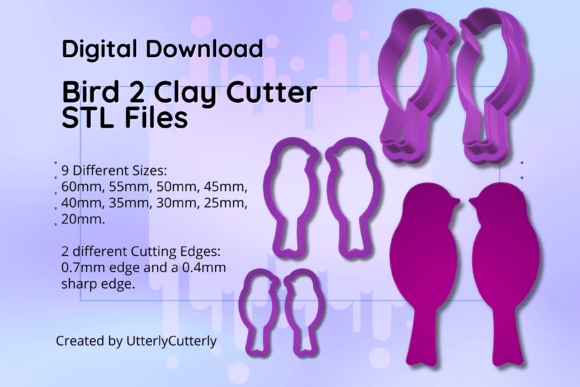
When assessing the utility of the Clay Cutter STL File Bird 2- Animal Earr, the primary consideration is the inclusion of two distinct cutting edge profiles within the same pack. This duality allows users to select the appropriate geometry based on the material being cut and the desired finish. Makers must evaluate which variant suits their specific workflow before printing.
- Standard Edge (0.7mm Wall): This variant features a 0.7mm wall thickness with a 3mm thick base and a total height of 12mm. The thicker wall offers increased structural rigidity during the cutting process. This profile is generally better suited for firmer clays or applications where durability of the printed tool is prioritized over extreme sharpness. It reduces the risk of layer separation when applying downward pressure.
- Sharp Edge (SE): Abbreviated as SE in the file names, this version utilizes a 1mm support wall tapering to a 0.4mm cutting edge. Like the standard version, it maintains a 3mm base and 12mm height. The reduced contact surface area at the cutting point allows for cleaner slices through soft polymer clay and fondant with less resistance. However, the thinner edge may be more susceptible to wear or damage if used with abrasive materials or excessive force.
Both variants include embossing lines that are 10.5mm tall. Users must note that these details only register effectively on clay slabs thicker than 1.5mm. Attempting to use the embossing feature on thinner sheets will result in incomplete impressions or potential tearing of the material.
Sizing Versatility and Production Scaling
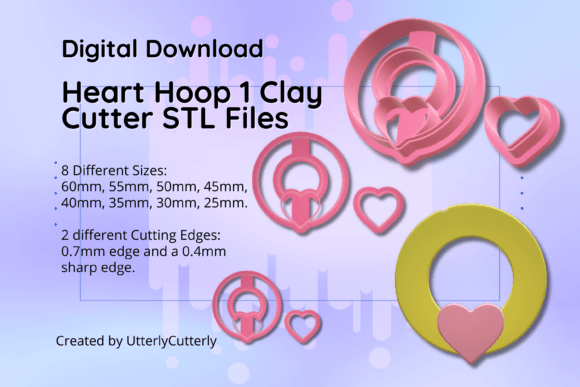
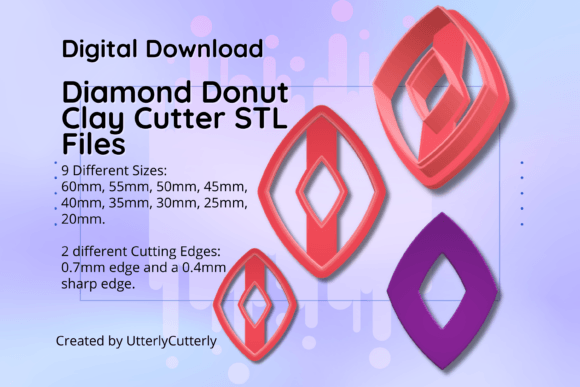
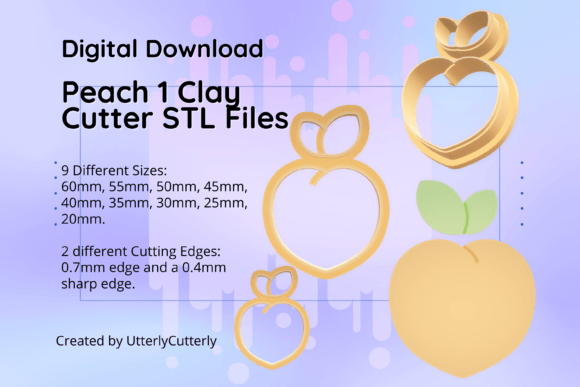
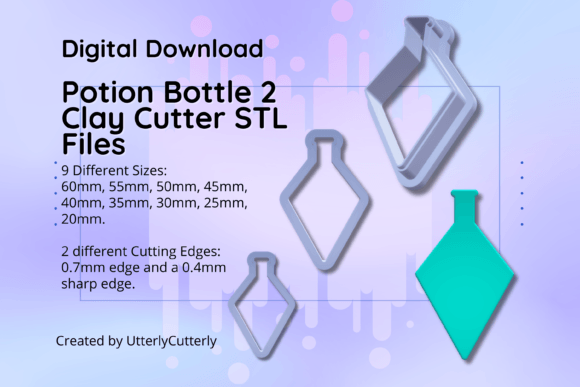
A significant advantage of digital STL files over traditional metal cutters is the availability of graduated sizing without additional manufacturing costs. This pack includes nine discrete sizes measured from the longest ends: 60mm, 55mm, 50mm, 45mm, 40mm, 35mm, 30mm, 25mm, and 20mm. This range facilitates several practical applications:
- Jewelry Matching: The smaller increments (20mm–35mm) allow for the creation of matched earring sets or delicate pendants where precise scaling is required for aesthetic balance.
- Product Line Diversification: Artists can offer the same bird design across multiple price points by utilizing different sizes for stud earrings, dangle earrings, and statement necklaces.
- Culinary Applications: Larger sizes (45mm–60mm) transition effectively to cookie and fondant decoration, expanding the ROI of a single digital purchase.
For makers curating custom cutter combos, the standardized sizing logic ensures compatibility with other STL files from the same designer, allowing for cohesive collection building.
Material Compatibility and Use Cases
The Clay Cutter STL File Bird 2- Animal Earr performs differently across various mediums. Evaluating your primary material is crucial for selecting the correct print settings and edge type.
Polymer Clay and Jewelry Making
This is the primary intended use case. The 12mm height accommodates standard conditioning and rolling thicknesses. The Sharp Edge (SE) variant is typically preferred here for achieving crisp edges that require minimal post-processing sanding. The embossing detail adds texture without requiring separate stamps, streamlining the jewelry production workflow.
Baking and Fondant
While marketed for jewelry, the food-safe nature of properly printed PLA makes these viable for baking. However, users must consider hygiene. 3D printed parts have layer lines that can harbor bacteria. For food use, it is strongly recommended to coat the printed cutter in a food-safe epoxy resin or use it exclusively with fondant and gum paste rather than direct dough contact. The Standard Edge may perform better with stiff cookie dough, while the SE variant excels with soft fondant.
Tradeoffs and Practical Considerations
Choosing digital STL files involves distinct tradeoffs compared to purchasing pre-manufactured brass or steel cutters. Objective evaluation requires weighing these factors against immediate convenience.
Print Quality Dependency
The performance of the Clay Cutter STL File Bird 2- Animal Earr is entirely dependent on printer calibration. Layer adhesion issues, nozzle clogs, or improper cooling can render the cutter useless. The 0.4mm Sharp Edge, in particular, demands precise extrusion tuning. Makers without a well-calibrated machine may experience higher failure rates or rough edges that transfer imperfections to the clay.
Durability vs. Cost
PLA and PETG cutters are consumable tools. Unlike steel, they will eventually dull, warp under heat, or snap. However, the cost per unit is negligible once the initial file is purchased. This makes them ideal for testing new designs or seasonal trends without committing to expensive custom metal tooling. If a design proves popular, makers can later invest in professional metal fabrication using the printed version as a prototype.
Post-Processing Requirements
FDM prints rarely emerge perfectly smooth. Users should expect to spend time sanding the cutting edges and bases to prevent texture transfer to clay. Resin printers produce smoother surfaces but require careful washing and curing to ensure no toxic residue remains, especially for jewelry that contacts skin.
Decision Framework: Is This Asset Right for You?
The Clay Cutter STL File Bird 2- Animal Earr is a strong fit for makers who possess 3D printing capabilities and value design flexibility over immediate plug-and-play convenience. It is particularly suitable for:
- Artists developing a signature style involving avian motifs.
- Makers needing immediate access to specific sizes without shipping delays.
- Hobbyists experimenting with clay-to-cookie cross-over projects.
- Small businesses managing inventory costs through on-demand tool manufacturing.
Conversely, alternatives such as commercial brass cutters or laser-cut acrylic templates may be preferable if:
- You lack access to a reliable 3D printer or printing service.
- Your production volume justifies the investment in permanent metal tooling.
- You require FDA-certified food safety compliance without additional coating steps.
- You need guaranteed dimensional accuracy beyond typical FDM tolerances.
Ultimately, this digital pack offers a low-risk entry point for expanding creative capabilities. By understanding the distinction between the 0.7mm and SE variants and respecting the material constraints regarding embossing depth, users can effectively integrate these tools into both artistic and culinary workflows. As new STL files are released weekly, this asset also serves as a benchmark for evaluating future additions to a growing digital tool library.